
Let's call it what it is.
Nigeria's inflation numbers have improved. But the structural pressure on businesses has not. And a new wave is building. Most companies are still operating like the last two years were a temporary spike. They were not. And what's coming next could be worse.
What stagflation actually means
Stagflation is not just high inflation. It is high inflation plus economic stagnation happening at the same time. Normally, inflation comes with growth. Businesses can absorb rising costs because demand is also rising. That logic breaks in stagflation. Prices go up. Growth slows. Consumer purchasing power drops. Businesses get squeezed from both ends: costs up, demand down. Nigeria went through that cycle hard. And according to the Centre for the Promotion of Private Enterprise (CPPE), we may be heading back into it. Here is where the numbers stand as of early 2026:
Headline inflation fell to 15.06% by February 2026, down from 24%+ in early 2025
Source: NBS CPI data, cited in CPPE Q1 2026 Economic Review
The Naira stabilised between N1,340 and N1,430 per dollar in the official market
Source: CBN exchange rate data, CPPE Q1 2026 Review
External reserves rose above $50 billion
Source: CPPE Q1 2026 Review
GDP grew 4.07% year-on-year in Q4 2025, full-year growth at 3.87%
Source: NBS GDP data, CPPE Q1 2026 Review
Those are real improvements. It would be dishonest to ignore them.
But here is the problem. The CPPE described the disinflation trajectory as fragile and vulnerable to reversal. Global energy prices are rising again. Oil above $100 per barrel means higher fuel costs, higher logistics, higher production costs across every sector. The pass-through to businesses and households is direct and fast. Real wages are still eroded. Energy costs are still punishing. Consumer purchasing power has not recovered. And the businesses that survived the last two years are not yet done rebuilding. That is still stagflationary pressure, even if the headline number has moderated.
The model most businesses are running is already dead
The implicit assumption in many companies is still this: "If costs go up, we'll increase prices. If we push volume, we'll be fine." That logic only works if customers have money. Right now, they do not. So, what is actually happening:
You increase prices and volumes drop
You hold prices and margins collapse
You try to do both and get confusion internally, erosion externally
There is no easy lever here. That is the point.
What this looks like inside a real business
Picture a business owner. Fifteen to forty staff. Operating through this environment. Here is what has landed on their desk. Staff want salary increases. Fuelling costs have gone up. Commuting is eating into take-home pay. That is legitimate and ignoring it risks losing people you have trained. At the same time, vendors have increased prices. Some because of FX. Some because their own costs are up. Some because everyone else is doing it and they can. Supply costs are up. Utilities are up. Rent renewal is coming and it will not be the same number.
Every single line item is moving.
The owner is in the middle of all of it. Payroll. Vendors. Customers who are also under pressure. And still trying to run the business strategically. That is not just a cash flow problem. That is an overwhelming problem. And overwhelm leads to reactive decisions. In this environment, that is how businesses quietly bleed out.
A budget is what anchors you
When everything is moving, a budget gives you a fixed reference point.
It tells you:
What you planned to spend versus what you are actually spending
Which cost lines have drifted and need immediate attention
Where the business is leaking cash, quietly, week by week
What your real break-even looks like right now
Without that clarity, you cut the wrong things. You hold the wrong costs. You make decisions in the dark. With a budget, you act precisely. Not just broadly and hope. At minimum you need three numbers in front of you right now:
Monthly burn rate
Break-even revenue
Fixed versus variable cost split
Because if revenue drops 20 to 30%, can you survive three to six months? Most businesses do not know the answer. That is the problem.
Practical ways to ride this out
The goal right now is not significant profit. It is survival and building relationships that outlast the downturn.
On your people:
You may not be able to match inflation with salary increases, but if you can, do it! If you can't, most staff understand that, if you're honest with them. But you can reduce the burden in other ways. Offer hybrid work if the role allows it. Three fewer commute days is real money back in someone's pocket. It costs you nothing. If hybrid isn't possible, consider a safe, clean space at work for staff who'd rather stay than spend on transport. Actively encourage and help coordinate carpooling. These aren't replacements for fair pay. They're genuine concessions. They reduce attrition during a period when replacing staff is expensive. And they build trust. Even if someone leaves because they genuinely need more income, they will always respect and speak fondly of the business for caring, and that's solid network marketing and branding!
On your vendors:
Where you have leverage, shorten credit days. It protects your cash position. Where you have a choice, move toward larger vendors, ones with scale to absorb cost shocks better than smaller suppliers. A vendor who can stabilise pricing is worth a slight premium right now. Invest in those relationships. Be transparent about your position. The vendors who trust you will be more flexible when you need it. Sustainability through a downturn is built on partnership—not transaction. Keep your smaller vendors, some as primary, others secondary sources and try to buy from them as much as you can with reduced credit days.
On your costs:
A budget review right now should surface what's crept up quietly. Subscriptions. Services. Recurring expenses that haven't been reviewed in 18 months. Discontinue nice to have or redundant expenses. That's where you find room to optimise, without cutting what actually drives the business.
Financial controls are not processes. They are survival.
Controls are often treated as finance slowing things down. That mindset will cost companies money this year. Controls are what tell you:
Where you are leaking cash
Which costs have quietly doubled
Who is spending without accountability
Whether your margins are real or assumed
Without controls, your business becomes reactive. Reacting in a high-inflation environment is how margins disappear. Not dramatically. Consistently. Until there is nothing left to protect.
Annual plans are already outdated
A budget done in January is already wrong by April in this environment. You need:
Rolling forecasts, monthly or quarterly
Scenario planning: base case and worst case
Continuous updates tied to actual performance
FX moves fast. Costs change quickly. Customer behaviour is unstable. Forecasting is how you avoid being surprised by your own business.
Finance has to lead
The finance team cannot sit in reporting right now. Your Finance team has to be empowered to:
Challenge pricing decisions
Push back on uncontrolled spending
Enforce budget discipline
Own forecasting and scenario planning
Not as a support function. As a strategic one. If finance is not driving structure, the business will drift. Drift in this environment is expensive. Business Owners and all stakeholders should empower and support the Finance Department policies and practice in their teams to ensure synchronicity.
The goal right now is not to win. It is to survive well. Team intact. Vendor relationships are strong. Financial structure clear enough to move when conditions shift. Significant profits are not the objective. Sustainability is. Strong relationships are. A business still standing, still credible, still capable. That is the win. Because when conditions improve, and they will, the businesses with clean books, loyal teams, and solid partnerships will move fastest.
Everyone else will still be recovering.
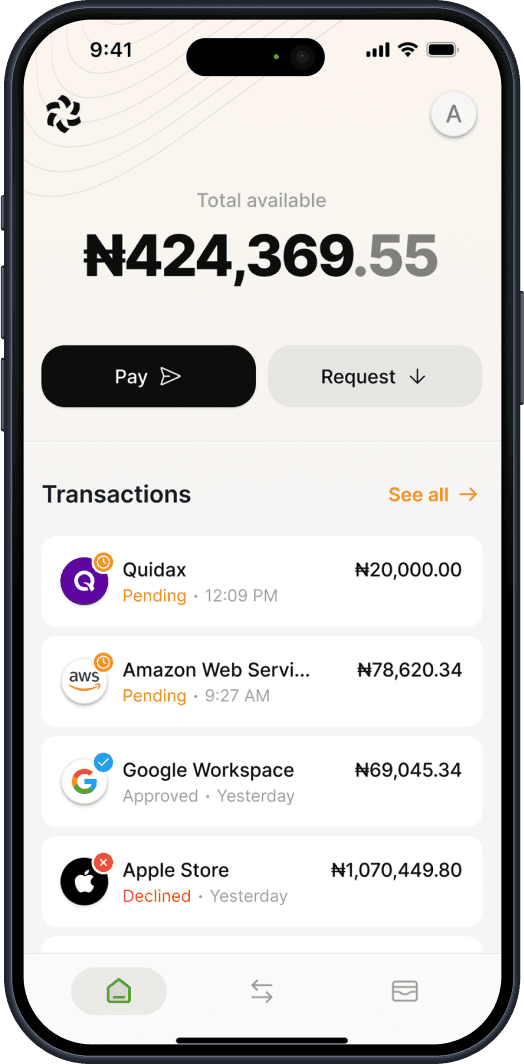
Tools that give you real-time spend visibility are not a luxury in this environment. They are infrastructure. Consider Bujeti for your budgeting and spend management needs. Learn more here