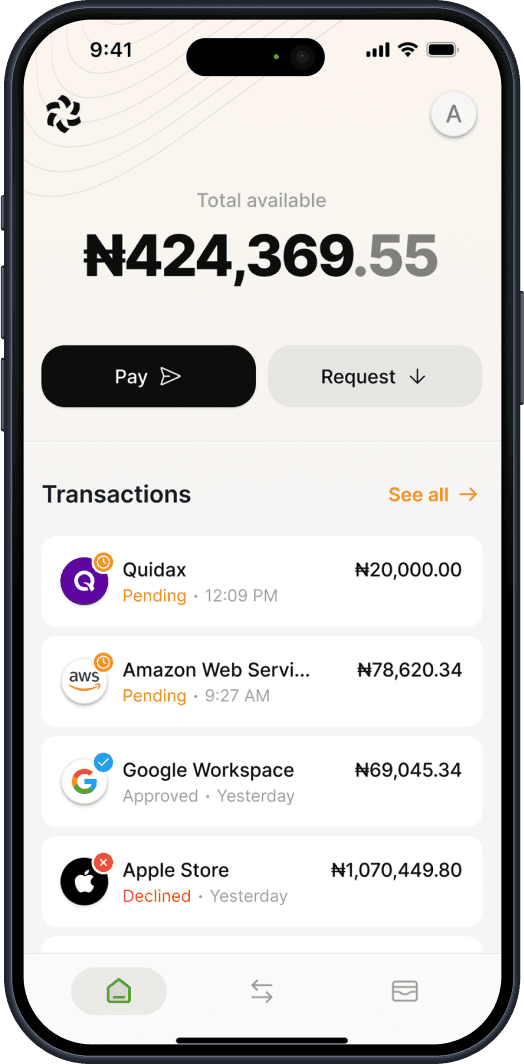
Run global finance with Bujeti Multi-Currency Accounts

Tobi Omoyeni
It's nearly midnight in Lagos. The finance lead at a fast-growing startup isn't dealing with a missed target or a team crisis; she's fighting with a wire transfer, again. A vendor payment to a US supplier just bounced, cloud infrastructure bills are piling up in dollars, and the business still runs on naira. So begins another month of the same exhausting cycle: sourcing FX, chasing conversion rates, juggling platforms, reconciling scattered transactions, and explaining the mess to leadership.
This story isn't an edge case. Across our customer base, it's one of the most consistent patterns we see. Finance teams still struggle to move money across borders without incurring time, margin, and momentum costs.
The problem runs deeper than just fees or platform preferences. Most companies still manage international finance like it's 2010, one platform for local payments, another for USD transfers, a separate FX provider, manual spreadsheets holding everything together, and three banking apps open at once just to get a clear picture of cash. When a payment moves from local to international, even the most structured finance teams are forced out of their systems entirely. The controls, the workflows, the visibility they've built, none of it travels with the money.
Today, we're solving it. Say hello to the Bujeti Multi-currency Accounts: One account. Multiple currencies. No operational gymnastics.
Introducing Bujeti Multi-Currency Accounts
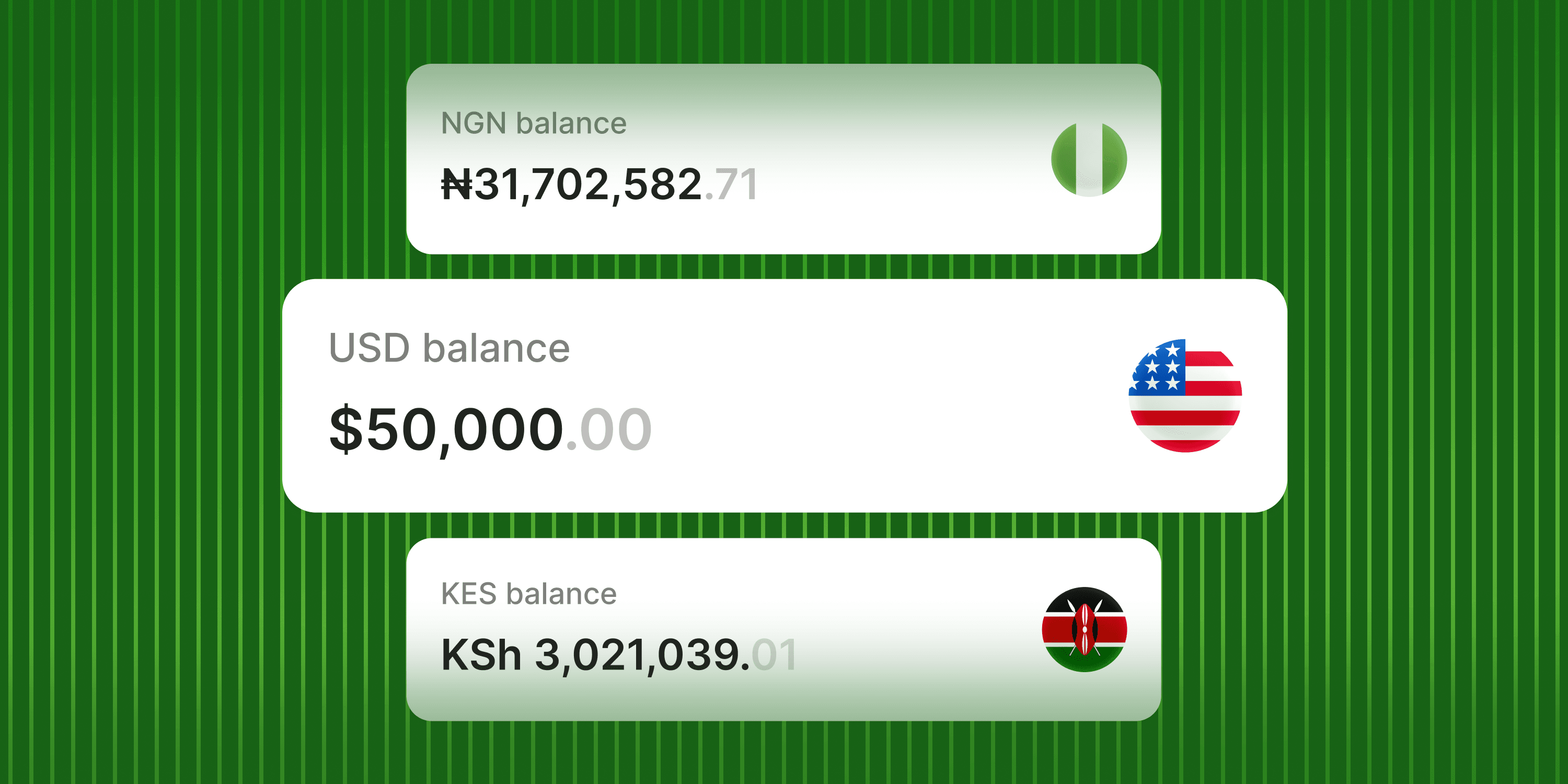
Bujeti Multi-Currency Accounts let your business hold, send, receive, and convert across currencies natively, from a single dashboard, without hidden fees, opaque rates, or the fragmented workflows you've been tolerating for too long. Here's what that looks like in practice:
Hold balances in USD, KES, NGN, and more in one unified view
Receive international payments with local account details, so your global clients pay you as easily as a local vendor would
Send to vendors and contractors in over 100 countries
Convert at transparent, competitive rates with no surprise spreads
Issue USD cards for global software and tool spend
Reconcile automatically with built-in expense management, approval workflows, and accounting integrations
The real cost of currency friction
Most businesses underestimate how much fragmented currency management actually costs them because it doesn't appear as a single line item. It bleeds quietly across the entire operation.
According to the World Bank, the average cost of sending money across African borders exceeds 8%, nearly three times the global average. For businesses making frequent international payments, that's not a rounding error. It's a tax on growth. Liquidity shortages further compound this, often forcing transactions through expensive offshore clearing systems in US dollars or euros, adding an estimated $5 billion in unnecessary costs across the continent every year.
Beyond the direct financial hit, the operational drag is just as damaging:
Slower financial operations: Finance teams spend hours coordinating transfers and manually tracking international payments that should take minutes.
Poor cash visibility: Funds scattered across platforms make it nearly impossible to know your real position in real time.
Margin erosion: Unfavorable conversion rates and unnecessary transfer fees compound into real money lost over time.
Strained vendor relationships: International partners read slow payments as a signal that you're difficult to work with.
Reactive finance teams: When teams are consumed by operational firefighting, the strategic work never gets done.
For businesses that want to scale, this is no longer sustainable.
Built for the businesses doing the work
The businesses that feel this most acutely tend to fall into a few distinct groups, and we've built for all of them.
SaaS companies spending on cloud infrastructure, software subscriptions, and remote teams no longer need to stitch together multiple banking workflows to keep the lights on globally.
Agencies and service businesses that bill internationally can receive client payments and settle with foreign vendors without the delays and conversion headaches that have become an accepted cost of doing business.
Startups scaling across markets get the kind of financial infrastructure that was previously out of reach, the sort that larger, more established companies take for granted.
Finance teams across all of these businesses get centralised visibility and real control: one place to see every currency, every transaction, and every approval, without toggling between platforms to piece the picture together.
What makes the Bujeti Multi-currency Account different
There's no shortage of tools that let you move money across borders. What's rare is one that does it without pulling your finance team out of the systems they've built to stay in control. That's the distinction Bujeti is built around.
Financial controls travel with every transaction: Every cross-border payment on Bujeti flows through the same approval workflows, budget policies, and audit trails that govern your other financial operations. Most cross-border tools treat payments as isolated actions. Bujeti treats them as part of a governed financial system.
Everything lives in one place: Your local accounts, USD balances, cards, expenses, and international payments all sit inside a single dashboard. No platform switching, no reconciliation headaches, no blind spots.
Transparent pricing, no surprises: The exchange rate and Bujeti's fee are displayed clearly before you confirm any transaction. What you see is what you pay.
Built for businesses, not individuals: Your USD account is held in your business name, not a personal account. Payments go out under your company's identity, as international vendors and clients expect.
It grows with you: Whether you're making a handful of large supplier payments a month or running a high-volume operation across multiple currencies, the infrastructure scales without requiring you to outgrow the platform.
The future of African business is borderless
African businesses aren't building for local markets anymore. A startup in Lagos now hires in Kenya, serves customers in the UK, pays vendors in the US, and raises capital from Europe. That's the reality today, and its scale is only growing. Africa's cross-border payments market currently stands at $329 billion and is projected to reach $1 trillion by 2035, driven by growing trade integration, mobile money adoption, and fintech-led cost reductions. The infrastructure powering that growth needs to keep pace.
That reality demands a financial operating system built for speed, visibility, and global scale, one that treats international operations as the default, not the exception.
That's what Bujeti Multi-Currency Accounts are.
How to get started
Log in to Bujeti and click 'Accounts' from the left-hand menu on your dashboard
Click 'Add an Account' to start the process
Choose 'USD' as the currency for your new account
Click 'Create Account' to submit your USD account application
Check your email for onboarding instructions and follow the steps to verify your account
Our team will review your application. You may be contacted if additional information or documentation is required
Once approved, your USD account details will be available on your Bujeti dashboard, ready for use
Getting set up takes 24-48 hours to get started. Sign up, complete verification, and create your multi-currency account. From there, you can receive international payments, convert currencies at live rates, pay global suppliers, and issue USD cards for team spend, all from the same dashboard you already use to run your finances on Bujeti.
Explore Bujeti Multi-Currency Accounts or book a demo to see what it feels like to run global finance from one place.