How Nigerian businesses can transform financial management with smart spend control solutions

Tobi Omoyeni

Every month, Nigerian businesses lose millions of Naira to poor expense management. From unauthorised spending and missing receipts to delayed approvals and manual reconciliation errors, the financial chaos is real and costly. If you're a CFO, finance manager, or business owner in Nigeria struggling with Slack messages for expense requests, endless email chains for approvals, and spreadsheets that never balance, you're not alone. But here's the good news: there's a better way to manage your company's finances.
The real cost of manual expense management in Nigeria
Managing business expenses manually isn't just tedious, it's expensive and risky. Nigerian companies face unique challenges that make traditional expense management particularly problematic:
Revenue leakage: Without real-time visibility, unauthorised purchases, duplicate transactions, and cash-based expenses slip through the cracks. Research shows that businesses lose an average of 3-5% of their annual revenue to poor spend control.
Compliance risks: Manual record-keeping makes it nearly impossible to maintain audit-ready documentation. When tax authorities or external auditors come calling, scrambling to find receipts and justify expenses wastes valuable time and creates unnecessary stress.
Operational inefficiency: Finance teams spend countless hours chasing receipts, manually entering data, and reconciling accounts. A transaction that should take three minutes to approve can take three days when handled manually.
Budget overruns: Without real-time spending data, departments frequently exceed their budgets. By the time finance discovers the overspend, it's too late to course-correct.
Team frustration: Employees waiting for expense approvals or reimbursements become frustrated with slow processes. This affects morale and productivity across your organisation.
For Nigerian businesses operating in a dynamic economic environment with currency volatility and multiple payment channels, these challenges compound quickly. The question isn't whether you can afford to modernise your financial management, it's whether you can afford not to.
What is Spend Management and why it matters for Nigerian businesses
Spend management is the process of tracking, controlling, analysing, and optimising how money flows out of your organisation. It encompasses everything from purchase requests and approvals to payment processing, expense reporting, and financial analysis.
Modern spend management goes beyond basic accounting software. It provides:
Real-time visibility into company spending across all departments and payment methods
Automated workflows that eliminate manual data entry and reduce human error
Spending controls that prevent unauthorised or out-of-policy purchases before they happen
Comprehensive reporting that gives finance leaders actionable insights
Integration capabilities that connect seamlessly with your existing accounting systems
For Nigerian businesses, effective spend management means:
Better cash flow management: In an environment where working capital is precious, knowing exactly where your money is going and when is critical for survival and growth.
Improved decision-making: Real-time financial data empowers leadership to make informed strategic decisions quickly, whether that's reallocating budgets, identifying cost-saving opportunities, or planning for expansion.
Enhanced team accountability: When every transaction is tracked and categorised, department heads take ownership of their budgets, and spending discipline improves across the organisation.
Regulatory compliance: Maintaining detailed, organised financial records isn't just good practice, it's essential for tax compliance and audit preparedness in Nigeria's evolving regulatory landscape.
Introducing Bujeti: Africa's leading financial control platform
Bujeti has emerged as the finance control centre for over 1,000 African businesses, offering a comprehensive solution purpose-built for the Nigerian market. Unlike international platforms that require workarounds and don't understand local business realities, Bujeti is designed from the ground up to address the specific financial management challenges Nigerian companies face.
Core features that transform financial operations
1. Corporate cards with built-in controls
Bujeti provides both physical and virtual cards that empower your team while keeping finance in control. Set spending limits, restrict merchant categories, and define approval workflows before cards are issued. Each transaction is automatically captured and categorised, eliminating receipt chasing and manual expense reports.
Before Bujeti, one Lagos-based company managed expenses through Slack messages, emails, and stressful bank transfers. Now, they simply issue cards, fund budgets, and everything flows seamlessly. The transformation isn't just operational, it's cultural.
2. Automated payment processing
Salary disbursement and vendor payments become stress-free with Bujeti's automation. What used to take three days now happens in three minutes. The platform handles bulk payments with tax compliance built in, ensuring your team gets paid on time while maintaining proper documentation.
3. Centralised account management
Instead of juggling multiple banking apps and spreadsheets, Bujeti consolidates all your business accounts and bank payments in one intuitive dashboard. This unified view provides the financial visibility CFOs need to make strategic decisions confidently.
4. Customisable approval workflows
Every business operates differently. Bujeti allows you to design approval processes that match your organisational structure. Set hierarchical approvals, require multiple sign-offs for large transactions, and enforce spending policies automatically.
5. Real-time expense tracking and reporting
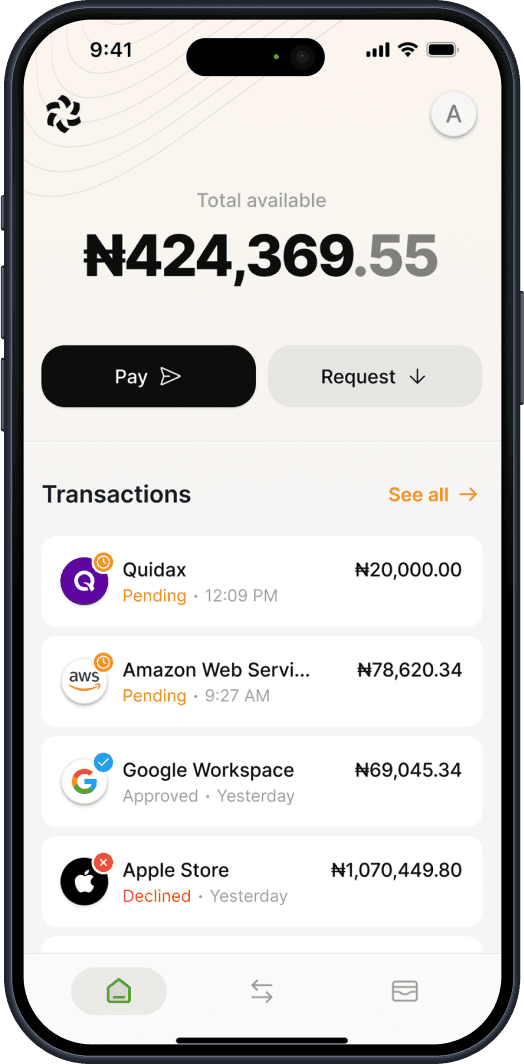
Monitor spending as it happens, not weeks later when the bank statement arrives. Bujeti's dashboard gives you instant insights into budget utilisation, departmental spending patterns, and expense categories. Generate audit-ready reports with a few clicks.
6. Intelligent financial insights
Ask Bujeti about your finances and receive instant analysis. The platform uncovers spending trends, identifies cost-saving opportunities, and provides actionable recommendations based on your financial data.
Why Nigerian Businesses choose Bujeti
Native Naira support: Unlike foreign solutions that require currency conversions and charge hidden fees, Bujeti supports Naira natively. Your transactions are processed in local currency, eliminating foreign exchange complications.
Nigerian bank integration: Bujeti integrates directly with Nigerian banks, enabling seamless disbursements, reconciliations, and transfers. No more manual uploads or delayed processing.
Designed for Nigerian business environment: The platform works in low-connectivity environments, making it perfect for companies with field teams or operations outside major cities.
Compliance-ready: Bujeti automatically maintains the detailed records and documentation required for Nigerian tax compliance and regulatory reporting.
Scalability without complexity: Whether you're a 20-person startup or a 500-employee enterprise, Bujeti scales with your business. You get enterprise-grade financial control without enterprise-level complexity.
Exceptional support: With personalised onboarding and guaranteed three-minute response times, Bujeti ensures your success every step of the way.
The ROI of modern spend management
Companies using Bujeti report positive ROI within five months, reaching 4.5x ROI within three years. This return comes from multiple sources:
Time savings: Finance teams reclaim 20-30 hours monthly previously spent on manual processes
Cost reduction: Eliminate out-of-policy spending and identify duplicate subscriptions or unnecessary expenses
Revenue protection: Prevent unauthorised spending and close loopholes that allow financial leakage
Strategic value: Free finance leaders from administrative tasks to focus on strategic initiatives that drive growth
For a mid-sized Nigerian company spending ₦50 million monthly, reducing operational inefficiency by just 5% means saving ₦2.5 million every month, ₦30 million annually. When you factor in time savings and improved decision-making capability, the value multiplies.
Getting started: Transform your financial operations today
The transition from manual processes to automated financial management might seem daunting, but Bujeti makes it simple. The onboarding process includes:
Consultation: Understanding your business needs and current pain points
Configuration: Setting up approval workflows, spending policies, and integrations
Training: Ensuring your team knows how to use the platform effectively
Migration: Transferring existing data and processes to Bujeti
Optimisation: Ongoing support to maximise value from the platform
Most companies are fully operational within days, not weeks. The platform's intuitive design means minimal learning curve for your team.
Take control of your company's financial future
In Nigeria's competitive business environment, companies that embrace financial technology gain a decisive advantage. While your competitors wrestle with spreadsheets and chase receipts, you'll have real-time visibility, automated processes, and strategic insights that drive better business outcomes.
The question isn't whether to modernise your spend management—it's when. Every day you delay costs money, wastes time, and creates unnecessary stress for your finance team.
Join over 1,000 CFOs, controllers, accountants, and finance administrators who have transformed their financial operations with Bujeti. Experience the peace of mind that comes from knowing exactly where your money is going, having complete control over company spending, and making strategic decisions based on real-time data.
Ready to stop losing money to poor expense management?
Visit www.bujeti.com to schedule a demo and see how Bujeti can transform your financial operations. Discover why Africa's leading businesses trust Bujeti as their finance control centre
Don't wait until the next budget crisis or audit nightmare.